
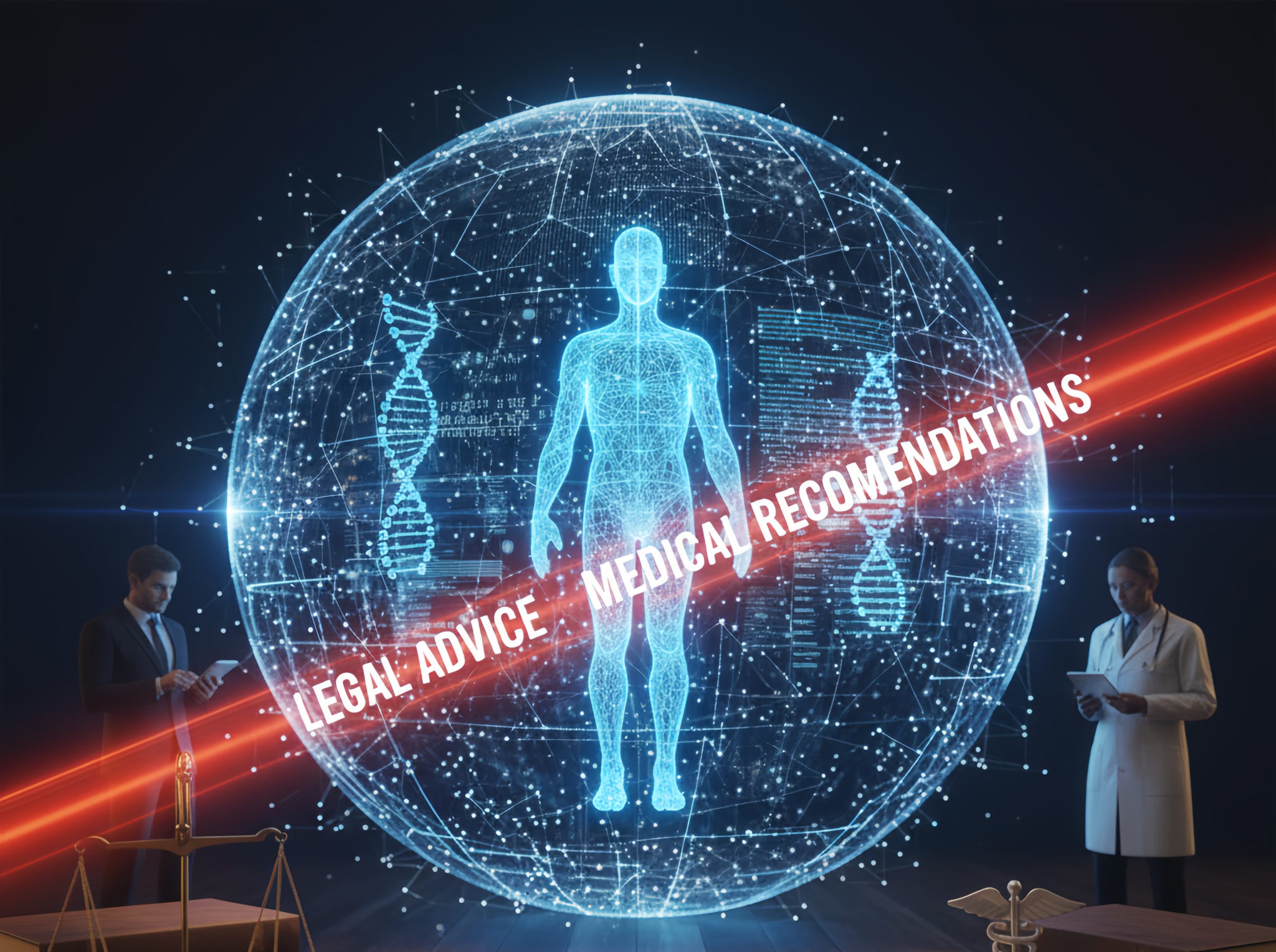
In this article, we take an in-depth look at why OpenAI decided to prohibit ChatGPT from providing legal and medical advice. In recent years, artificial intelligence has rapidly advanced and penetrated almost every sphere of human activity, including law and healthcare. However, despite all the advantages, these fields involve significant risks and require strict control because of potential safety and liability concerns. OpenAI’s decision is based on several serious technical and ethical considerations that shape the company’s product-development policy.
Why the Need for a Ban Arose
ChatGPT, designed as a universal language model, can answer a wide range of questions and assist users in various tasks. But legal and medical advice are areas in which even minor inaccuracies or missing information can lead to severe consequences. In legal matters, misinterpretation of laws can result in rights violations; in healthcare, it can lead to life-threatening decisions. The risks stem not only from potential errors but also from the fact that AI is not a licensed professional and cannot assume the role of an expert.
Dangers of AI-Provided Medical Advice
Medicine is a highly sensitive and complex field that cannot be reduced to a set of algorithms. Although ChatGPT can process extensive medical information and provide general knowledge, it lacks the ability to consider individual patient factors such as medical history, current condition, and drug interactions. Research, including studies published in the Journal of Medical Internet Research, shows that using AI without professional medical oversight may lead to incorrect diagnoses or inadequate treatments.
OpenAI seeks to avoid scenarios where users interpret AI responses as professional recommendations and rely on them when making important health decisions. Incorrect medical guidance can directly endanger people's lives.
Risks of AI-Generated Legal Advice
Legal practice demands extraordinary precision and up-to-date knowledge. Laws change frequently, vary across jurisdictions, and rely on complex legal norms and precedents that AI may not always interpret correctly. Moreover, legal advice is not merely information — it is context-aware guidance tailored to the client’s situation.
OpenAI recognizes the risk that ChatGPT could provide simplified or outdated formulations, leading users to misunderstand the law. This is particularly important in light of potential legal liability if users suffer harm due to relying on incorrect AI-generated advice.
How OpenAI Implemented the Ban: Technical and Ethical Foundations
To prevent such use cases, OpenAI implemented moderation and filtering mechanisms. The model is trained to recognize medical and legal requests and respond with either general information or a recommendation to consult a professional. Technically, this is achieved through layered filters and rules enforced both algorithmically and with human oversight.
OpenAI’s ethical standards, discussed in company reports on responsible AI development, emphasize that AI should serve as a helpful tool rather than replacing professional experts. This reflects OpenAI’s commitment to safety, transparency, and social responsibility.
Impact on Users and Community Reaction
Restrictions sparked mixed reactions. On one hand, many users understand the necessity of caution and support the bans, recognizing the responsibility that lies on creators of such technologies. On the other hand, some users expressed frustration because AI is convenient, accessible at any hour, and often faster than professional consultations.
Experts note that maintaining this balance is crucial for sustainable AI development. Stanford University research highlights that clear explanations of limitations improve user trust and the quality of interactions.
How to Interact with ChatGPT When Legal or Medical Information Is Needed
The first and most important rule is not to interpret ChatGPT’s responses as diagnoses or official legal conclusions. AI is useful for learning general principles, clarifying terms, or preparing questions for a doctor or lawyer — but not for making decisions that impact health or legal rights.
AI can help users prepare for a consultation by organizing their thoughts and providing background information. This saves time and often leads to more effective communication with professionals.
The Future of AI in Medical and Legal Fields
Despite current limitations, OpenAI and other organizations continue developing AI that supports — not replaces — specialists. Machine-learning technologies are improving, and new systems integrated with medical databases already assist doctors with diagnosis and help lawyers analyze documents.
The world is moving toward AI becoming a reliable decision-support tool, ensuring safety and enhancing the quality of services. Achieving this requires strict standards, professional supervision, and continuous innovation.
Ethical Dimensions and Developer Responsibility
A key aspect of OpenAI’s policy is responsibility for potential consequences of its technology. The prohibition on medical and legal advice reflects concerns about possible harm to users. AI ethicists emphasize the need for clear rules to prevent misuse of intelligent systems.
OpenAI works closely with governmental and international organizations to align standards and maximize user safety—an example of how the AI industry embraces responsibility and transparency.
The Role of AI in the Future of Law and Medicine
AI is already transforming legal and medical professions by automating routine tasks, improving data analysis, and enhancing research quality. Automated systems help lawyers find precedents and prepare documents, while AI in medicine analyzes imaging and predicts disease progression.
However, fully automated consultations without expert oversight remain impossible and undesirable. OpenAI therefore adopted a strategy of gradual integration with strict ethical safeguards — a model that may shape the entire industry.
How OpenAI’s Policy Influences Other AI Products
OpenAI’s restrictions inspire developers to create more specialized and secure solutions for law and healthcare. Many current projects focus on hybrid systems where AI operates under the supervision of human experts.
The emphasis on safety and ethics sets standards for the whole industry and helps prevent crises of trust. This affects investment decisions, regulatory initiatives, and public perception of AI technologies.
Why OpenAI's Ban on Medical and Legal Advice Is a Crucial Step
The ban is a responsible and necessary measure to prevent potential harm. It is supported by research and experience and demonstrates OpenAI’s commitment to protecting users. AI should remain a reliable assistant, not a replacement for professional expertise.
This approach helps ensure that AI contributes to solving modern challenges without exposing people to risks or undermining professional responsibility.